
Why Won't Soap Lather, and Why Do My Glasses Look Cloudy? Hard Water Explained
QUICK ANSWER: Both problems trace back to hard water, meaning water carrying a high load of dissolved calcium and magnesium. Those minerals grab onto soap before it can foam, forming a sticky curd (soap scum) instead of lather, and they dry onto glassware as mineral spots or a permanent cloudy etch. The lasting fix for both is a salt-based water softener, which swaps the calcium and magnesium out through ion exchange. A rinse aid and a cooler dishwasher cycle help with spotting, and vinegar dissolves scale that has already formed, but only a softener removes the hardness itself.
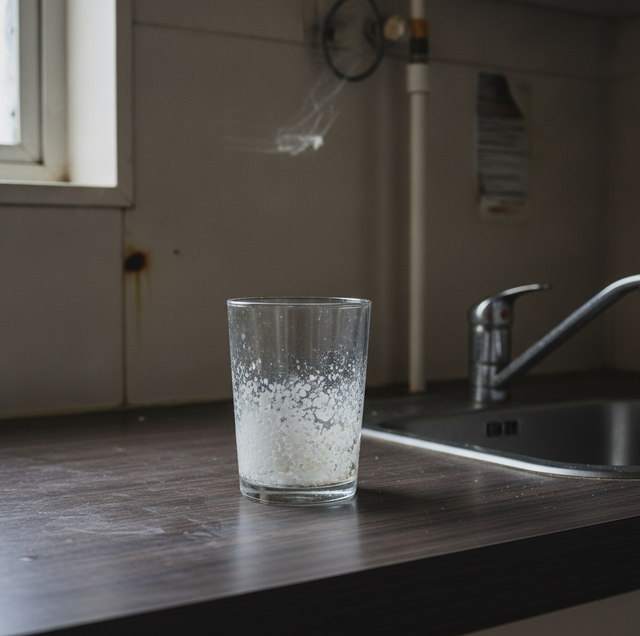
Two complaints tend to show up together: the soap in the shower barely foams no matter how much you use it, and the glasses coming out of the dishwasher look milky or spotted even though they are clean. People often chase these as separate problems, blaming a cheap bar of soap or a failing dishwasher. They are usually the same problem wearing two costumes, and the culprit is the water itself.
What Makes Water "Hard" in the First Place
Hardness is a measure of how much dissolved calcium and magnesium the water carries. As groundwater and river water move through rock and soil, they pick up these minerals and hold them in solution. You cannot see them, but they are along for the ride every time you turn on a tap.
Plumbers and water reports measure hardness in grains per gallon (gpg). Water under about 3 gpg is considered soft, and anything above roughly 7 gpg is hard. Water in many areas runs far past that line, into the very hard range. That high mineral load is the engine behind both the lather problem and the cloudy glassware, along with a list of smaller annoyances most people never connect to a single cause.
Why the Soap Refuses to Lather
Soap works by lifting oils and grime so water can rinse them away, and lather is the visible sign that it is doing that job. Calcium and magnesium sabotage the process. When soap encounters hard water, the minerals bind to the soap molecules before it can suspend dirt, and the reaction produces an insoluble curd rather than foam. That curd is soap scum.
So the soap is not weak or defective. It is being consumed by the minerals faster than it can lather, which is why the instinct is to keep adding more. The scum that forms does not rinse cleanly either. It clings as a dull film on skin and leaves hair feeling coated, and it builds the grayish ring on the tub and the streaky haze on shower doors that never seems to fully wipe away. In the laundry, the same reaction leaves detergent behind in the fibers, so towels and clothes come out stiff and scratchy.
Spots Versus Etching on Your Glassware
The cloudy glass problem actually splits into two distinct cases and telling them apart matters because one is reversible and the other is not.
The first is spotting, or mineral deposits. When hard water dries on glass, it evaporates, leaving behind dissolved calcium and magnesium as a whitish residue. Those are surface deposits on the glass, so you can often wipe or polish them off.
The second is etching, and it is permanent. Etching mainly occurs in the dishwasher, where hot water, detergent, and soft or softened water can slowly abrade the glass surface over many cycles, leaving a frosted cloudiness. Confusingly, both very hard water and over-softened water can drive etching, which is why it takes a little diagnosis. The key difference: spots sit on the surface, whereas etching damages the surface. Once glass is etched, no cleaner can bring it back, because the glass itself has been eaten into.
The Other Tells That Point to Hard Water
If lather and glassware were the only clues, hard water would be easy to miss. It leaves a broader trail:
Crusty white scale on faucet aerators, showerheads, and around fixtures, where dripping water dries and stacks up mineral deposits.
Stiff, dingy laundry that fades faster and feels rough, from detergent and minerals locking into the fibers.
More soap and detergent used across the board, because a share of every dose is spent fighting minerals instead of cleaning.
Scale forms inside the water heater, where heat drives minerals out of solution so they settle as a hard crust on the tank bottom and heating elements.
Think of it like a coffee maker that slowly builds up a crust inside from months of use. The same layer building on that heating plate is forming throughout a hard-water home's plumbing and appliances, just out of sight.
The Fix That Actually Solves It
Because both the lather and the spotting come from dissolved calcium and magnesium, the real solution removes those minerals, and that is what a water softener does. A salt-based softener works by ion exchange: water flows through a tank of resin beads that hold sodium ions, and as the hard water passes through, the beads trade their sodium for the calcium and magnesium in the water. The hardness minerals stay stuck to the resin, and the water that comes out the other side is soft. Periodically, the system flushes itself with a brine solution to recharge the beads, which is what the salt in the tank is for.
With the minerals gone, soap lathers the way it is supposed to, scum stops forming on skin and surfaces, and spotting on glassware drops off sharply because there is no longer a mineral load to dry onto the glass.
A few points worth separating out:
A softener is not a filter. A softener removes hardness through ion exchange. A carbon or sediment filter improves taste, odor, and clarity but does nothing to calcium and magnesium, so it will not fix lather or spotting. They solve different problems.
Salt-based versus salt-free. Only a salt-based softener actually removes hardness. So-called salt-free "conditioners" alter how minerals crystallize to reduce some scale buildup, but they leave calcium and magnesium in the water, so lather and spotting largely persist.
For spotting specifically, a rinse aid and a lower-heat dishwasher cycle both help. Rinse aid breaks the surface tension so water sheets off instead of beading up and drying into spots, and cooler water leaves less mineral behind. These manage the symptoms on the glassware but do not affect the water reaching the rest of the house.
For a scale that has already formed, plain white vinegar dissolves it. Soaking an aerator or showerhead in vinegar breaks down the mineral crust so it rinses free, and a vinegar cycle can clear light deposits from a dishwasher. This cleans up existing buildup but does not prevent the next round.
Frequently Asked Questions
Run a quick test. Dampen a cloth with white vinegar and rub a foggy spot. If the cloudiness clears or lightens, those are mineral deposits from hard water, and they will keep coming back until the water is treated. If the vinegar does nothing and the haze stays exactly as it was, the glass is etched, which is physical damage to the surface that cannot be reversed. Etched glass has to be replaced. Catching hard-water spotting early, before repeated hot dishwasher cycles have a chance to etch, is what keeps glassware from crossing that line.
Yes, because both come from the same minerals that a softener removes. Through ion exchange, the softener strips out the calcium and magnesium that were bonding to your soap and drying onto your glasses. Once they are gone, soap foams normally, with much less wasted, and glassware has almost no mineral load left to dry into spots. It resolves the root cause rather than managing the symptoms one appliance at a time.
Many people notice that softened water feels slick or slippery on the skin, especially in the shower. That is the soap actually rinsing cleanly for the first time. In hard water, a thin layer of soap scum sticks to your skin and gives a "squeaky" feeling that people mistake for cleanliness; softened water rinses that residue fully away, which is the slippery sensation. The tiny amount of sodium added during ion exchange is very small for typical hardness levels. Households watching sodium closely sometimes use potassium chloride in place of sodium in the softener, or add a reverse osmosis tap for drinking water.
The fastest way is a hard-water test strip, which changes color against a chart to give a grains-per-gallon reading in a couple of minutes. For a precise number, a plumber can run a titration test on site or send a sample to a lab, which also reveals other water chemistry that a strip misses. Your municipal water quality report also lists an average hardness figure, though the hardness at your tap can differ from the system average. Knowing your GPG tells you how aggressively your water is working against you and helps size a softener correctly.
Rinse aid and a cooler cycle really do reduce spots, but only inside the dishwasher. They do nothing for the soap that will not lather in the shower, the scum on the tub, the stiff laundry, or the scale building up in the water heater and pipes. A softener treats every drop entering the home, so it fixes all of those at once. The dishwasher tricks are a good stopgap, or a fine solution if cloudy glasses are truly your only complaint, but they leave the whole-house problem untouched.
Over time, yes. In a water heater, heat drives dissolved minerals out of solution, causing them to settle as a hard scale layer on the tank bottom and heating elements. That layer insulates the water from the heat source, so the unit works harder and runs less efficiently, and the buildup can shorten the tank's usable life. Scale also coats the sacrificial anode rod that protects the tank from corrosion, and it narrows the inside of pipes and clogs fixture aerators. Softening the water slows all of that dramatically, which is a large part of why softeners are so common in high-hardness areas.
Get your water tested and ask about a softener sized for your home — soft water that lathers right and leaves glassware clear. Frontier Plumbing serves Las Vegas, Henderson, and Enterprise. NSCB #286781. Call (702) 602-6705.