
Why Does My Toilet Keep Running? The Ten-Minute Diagnosis
QUICK ANSWER: A toilet keeps running because water is still entering or leaving the tank instead of shutting off. Either the flapper at the bottom is leaking water into the bowl so the fill valve keeps topping the tank off, or the float is set too high, and water spills into the overflow tube. A ten-minute dye test tells you which.
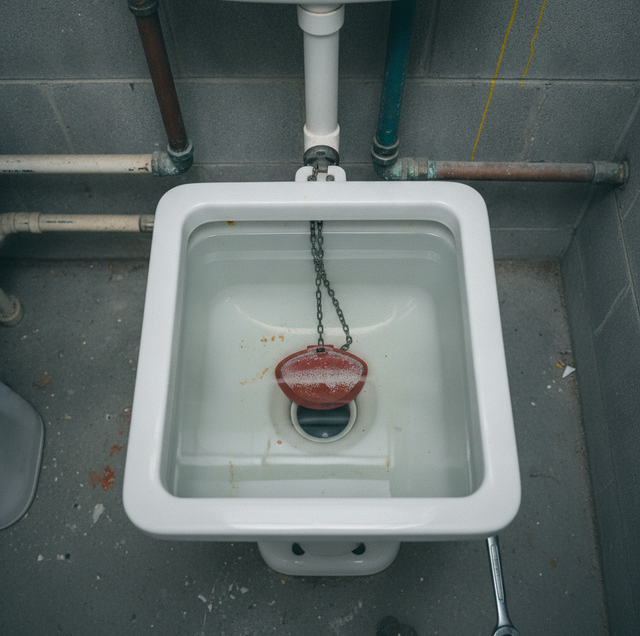
That faint hiss behind the bathroom door, the sudden refill in the middle of the night, the handle you have to jiggle just to make it stop. A toilet that keeps running is one of the most common calls a plumber takes, and almost every time the cause traces back to a single part inside the tank that has stopped doing one simple job: sealing.
Once you understand what the tank is supposed to do when it works right, finding the fault takes only a few minutes. The good news is that most of the parts involved are inexpensive, replaceable, and sitting right under the lid.
What Actually Happens Inside The Tank
Lift the lid off the tank and watch one flush. The whole sequence is quick, but every step depends on the one before it.
When you push the handle, a chain lifts the flapper, the rubber seal covering the drain opening at the bottom of the tank. The tank water rushes down through that opening into the bowl, pushing the waste through. As the tank empties, the flapper drops back onto its seat, closing the drain so the tank can refill. That closing is the critical moment: if the flapper seals flat, the tank starts to refill, and everything else follows. If it does not seal, nothing downstream can ever catch up.
With the drain sealed, the fill valve opens, sending fresh water back into the tank. A float rides up on the rising water. When the water reaches the level the float is set for, the float shuts the fill valve off, and the tank sits full and quiet until the next flush.
Picture a bathtub with the drain plug pulled by a string and the faucet controlled by a floating shutoff. If the plug does not seat, the tub never fills, and the faucet runs forever trying to keep up. If the floating shutoff is set too high, the faucet keeps pouring until the tub overflows. A running toilet is almost always one of those two failures.
The Flapper: The Part That Fails First
The flapper is the most common culprit by a wide margin, and there is a mechanical reason for that. It is a piece of flexible rubber that bends open on every single flush and drops closed again, thousands of times a year. Rubber does not stay soft and flat forever. It stiffens, it warps at the edges, and it collects a thin crust of mineral scale on the sealing face. Once the flapper can no longer lie perfectly flat against its seat, water seeps past it out of the tank and down into the bowl.
Here is why the toilet keeps running: as tank water trickles into the bowl, the water level in the tank slowly drops. The float drops with it, the fill valve senses the lower level and opens to top the tank back up, and the cycle repeats indefinitely. The toilet is not flushing, but it keeps refilling because it never stops leaking. Sometimes you hear it as a hiss; sometimes the leak is silent, and the only sign is the fill valve kicking on for no reason.
Replacing a flapper is one of the more approachable plumbing repairs. Shut off the water at the wall valve behind the toilet, flush to empty the tank, unhook the old flapper from its pins and chain, and clip a matching one in place. The important part is matching the size and style, since flappers are not universal, and a two-inch seat needs a two-inch flapper.
When The Water Runs Into The Overflow Tube Instead
Not every running toilet is a flapper problem, and this is where a lot of people replace the wrong part. There is a second path water can take, and it looks and sounds different.
In the middle of the tank stands a vertical pipe called the overflow tube. Its job is a safety one: if the tank ever fills too high, the excess drains down that tube into the bowl instead of spilling over the top of the tank onto your floor. But that safety feature turns into a nuisance when the float is set too high. If the shutoff point is above the overflow tube’s top, the fill valve never reaches the level at which it shuts off. It keeps running, and the surplus pours steadily down the overflow tube.
The way to tell the two apart is to look at where the water is moving. A flapper leak pulls water down at the very bottom of the tank, around the drain seat. A float or overflow problem causes water to flow down the central tube while the fill valve keeps hissing. If you see a steady stream running into the top of that middle pipe, the flapper is not your problem. Lower the float so the water shuts off about an inch below the top of the overflow tube, and the running usually stops.
The Chain Nobody Suspects
There is a subtle version of the flapper problem that has nothing to do with worn rubber. The chain that links the flush handle to the flapper has to be the right length. If it is too short, or if it kinks and tangles, it holds the flapper slightly open even after the flush finishes. The tank can never seal because something is physically propping the drain open, so it runs continuously.
The opposite extreme causes trouble, too. A chain with far too much slack can droop under the flapper as it drops and wedge underneath it, holding it off the seat. The fix in both cases is the same idea: set the chain so there is a small amount of slack when the flapper is closed, enough that it does not hold the flapper open but not so much that it can slip beneath it. This is a thirty-second adjustment that resolves a surprising share of running toilets.
The Fill Valve And The Less Common Faults
If the flapper seals, the chain is right, and the float is set correctly, but the toilet still runs, the fill valve itself may have failed. The fill valve is the tall assembly on the left side of the tank that lets fresh water in. Over time, the internal seals wear out, and it can no longer shut cleanly, so it continuously weeps water into the tank. That water then leaves through the overflow tube, mimicking a float problem. A fill valve that will not shut off even after you have lowered the float is usually spent and gets replaced as a unit.
Two rarer faults round out the list. A crack in the overflow tube itself lets tank water drain out below the normal water line, so the fill valve keeps running to replace it. And the flush-valve seat, the plastic ring the flapper actually seals against, can degrade or collect scale so that even a brand-new flapper cannot get a tight seal. When a fresh flapper still leaks, inspect the seat it lands on before assuming the new part is defective.
The Dye Test That Settles It
Before you buy any parts, run the test that tells you exactly what you are dealing with. Take the lid off, add a few drops of food coloring to the tank water, and walk away for about ten minutes without flushing. When you come back, look in the bowl. If the water in the bowl has picked up the color, the flapper is leaking, because the only way dyed tank water reaches the bowl without a flush is past the flapper seal. If the bowl stays clear, the flapper is fine, and your running water is a float or fill-valve issue, route water down the overflow tube.
That single test saves you from the classic mistake of swapping a good flapper while the real problem sits untouched a few inches away.
Why It Is Worth Fixing Quickly
A running toilet is easy to ignore, especially the silent kind. But a flapper that leaks steadily passes a continuous thread of water, and over a full day, that adds up to a large volume of clean water. This is why a toilet you cannot even hear can still show up as a sharp jump on your water bill. The repair is small; the waste, left alone, is not.
Mineral content in the water plays a two-sided role here. Scale builds up on rubber sealing surfaces over time, but it happens faster where the water carries more dissolved minerals. That scale is what stiffens flappers and coats fill-valve seals, so they stop sealing sooner. It is not a seasonal issue, and it is not unique to any one place; it is simply a matter of how much mineral moves through the toilet and how long the parts have been in service. A home with hard water may need to replace a flapper more often than one with softened water, and that is normal wear rather than a sign of a defective part.
None of these repairs is dangerous. The only real precaution is to shut the water off at the supply valve on the wall behind the toilet before you open anything up, so the tank stays empty while you work. If you replace the flapper and the fill valve, run the dye test again, and the toilet still runs, the trouble is likely in the flush-valve seat or the overflow tube, and that is the point where a plumber can pull and reseat or replace the full valve assembly.
Frequently Asked Questions
Do the checks in order, and one will land within a few minutes. First, confirm the tank is even refilling: if it stays bone dry and silent with no trickle into the bowl at all, the flapper is not your problem, the water is not arriving in the first place, and the fault is the supply stop on the wall or a dead fill valve. If the tank does refill, listen and look for where water is escaping, past the flapper at the bottom or down the central overflow tube, and that tells you which part to touch.
The flapper is the rubber seal at the bottom of the tank that lifts to flush and drops to hold the tank full. It fails first because it flexes on every flush and eventually stiffens, warps, or crusts with scale. One thing quietly speeds that up: the in-tank chlorine or bleach tablets people drop in to keep the bowl clean. Sitting in the tank, the chlorine attacks the rubber and hardens and warps it far faster than normal wear, so a flapper that should last years can go brittle in months. If yours keeps failing early, pull the tablets out of the tank.
That happens when the float that shuts the fill valve is set too high, so the valve never reaches its shutoff point and the surplus spills down the central tube. How you lower it depends on the valve: a modern column-style fill valve has an adjustable clip on the float or a screw on top that you turn to set the shutoff level, whereas an older brass ballcock uses a float on a metal arm that you physically bend down. Set the shutoff to about an inch below the top of the overflow tube.
The chain connects the flush handle to the flapper. Too short or tangled, and it holds the flapper open; too long, and it slips underneath and props it off the seat. Aim for about a half-inch of slack with the flapper closed, enough that the chain never props the seal open but not so much that it can wedge under it. One thing to check, even when the chain looks right: a worn or bent handle arm inside the tank can hang up and hold the flapper open on its own, so if the slack is correct and it still runs, inspect the handle lever.
More than people expect, and the silent leaks waste the most because nothing prompts a fix. A steady flapper leak can pass on the order of a couple of hundred gallons a day, and a bad one far more, which is enough to move a monthly water bill by a noticeable amount on its own. A quick way to catch a silent one between dye tests: mark the tank water line with a pencil, shut the supply stop, and check in an hour. If the line drops, water is leaking past the flapper even though you never heard it.
Yes. Minerals in the water leave scale on the rubber sealing surfaces, so they stop sealing sooner. It also changes what you repair. A hinged rubber flapper is swapped as a whole part, but many newer toilets use a canister-style flush valve that lifts straight up, and on those, you do not replace a flapper at all; you replace just the rubber seal ring at its base. That canister seal scales differently and often outlasts a flapper, so on hard water, a plumber may point you to the seal ring rather than a full flapper cycle.
Book a quick tank diagnosis — stop the waste before it hits your next bill. Frontier Plumbing serves Las Vegas, Henderson, and Enterprise. NSCB #286781. Call (702) 602-6705.