
Why Your Water Heater Runs Out of Hot Water So Fast
QUICK ANSWER: When hot water runs out faster than it used to, the tank's usable capacity or heating has dropped. The usual causes are sediment buildup eating into the tank's volume, a broken dip tube letting cold water mix with the hot at the top, a failed lower heating element (on electric heaters) or a thermostat set too low, or a tank that's simply undersized for the household. Sediment is especially common in hard water. Each has a different fix, so the cause matters.
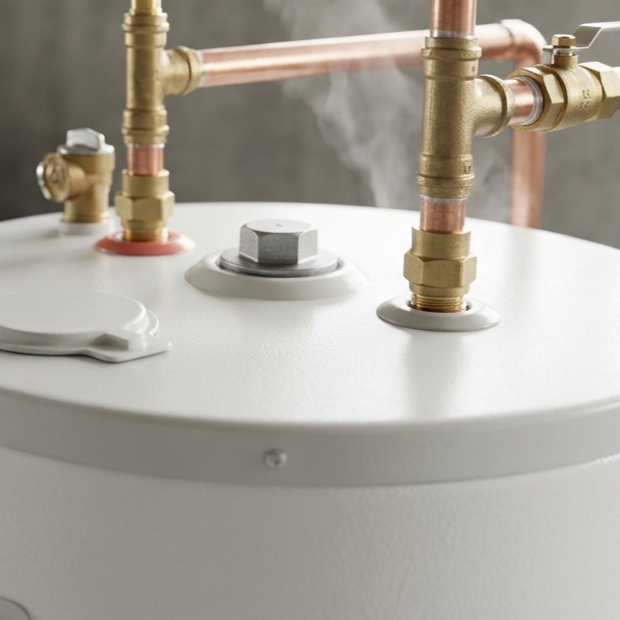
It's a familiar letdown: the shower goes lukewarm halfway through, or the second person never gets a warm one. If your water heater used to keep up and now runs out fast, something inside it has changed — its capacity, its heating, or the way the hot and cold water are mixing. The cause decides the fix, so it pays to understand what's actually happening in the tank.
What "Running Out Fast" Really Means
A storage water heater holds a tank of heated water and warms more as you draw it down. You "run out" when you use the hot water faster than it can be reheated, or when the tank's actual supply of hot water has shrunk. So the question is one of two things: why is there less hot water than there should be, or why isn't it being reheated? A few specific problems cause each.
The Common Causes
Sediment Buildup
This is the leading cause, especially in a hard-water area like the Las Vegas Valley. Minerals settle out of hard water and pile up as sediment on the bottom of the tank. That layer takes up room that used to hold hot water, so your real capacity drops — you simply have less hot water to draw before it's gone. Sediment also sits between the burner and the water, insulating it and making heating slower and less efficient. A heater that rumbles or pops while it runs out fast is very likely full of sediment.
A Broken Dip Tube
The dip tube carries incoming cold water down to the bottom of the tank, so it heats from the bottom while you draw hot water off the top. If the dip tube cracks or breaks, cold water gets dumped near the top and mixes straight into the hot water heading for your faucets — so the water turns lukewarm fast even though the tank isn't empty. This is a classic reason for a sudden drop in the duration of the hot water.
A Failed Heating Element or Low Thermostat (Electric Heaters)
Electric water heaters have two heating elements, upper and lower. If the lower one fails, only the top of the tank heats, so you get a small amount of hot water that runs out quickly. A thermostat set too low, or a failing one, does much the same thing. On a gas heater, a thermostat or burner problem can drag down how well it heats and recovers.
An Undersized Heater or More Demand
Sometimes nothing is broken — the household's hot-water demand has simply outgrown the tank. More people, a new high-flow shower, or back-to-back showers and laundry can drain a tank that was sized for less. If the heater is older and small for the home, it may just not have the capacity, and its recovery rate — how fast it reheats — can't keep up.
| What you notice | Likely cause | What to do |
|---|---|---|
| Runs out fast, tank rumbles/pops | Sediment buildup | Flush the tank; treat hard water |
| Hot turns lukewarm quickly | Broken dip tube | Replace the dip tube |
| Only a little hot water (electric) | Failed lower element/low thermostat | Test and replace element/thermostat |
| Never enough for the household | Undersized or aging heater | Consider a larger or tankless unit |
What to Do
Match the fix to the cause. If the heater rumbles and runs out fast, sediment is the likely culprit, and flushing the tank can bring capacity back — while treating the hard water that causes it keeps the buildup from returning. If the water goes lukewarm fast and the tank isn't old, a broken dip tube is a strong suspect and a fairly simple replacement. On an electric heater that suddenly gives only a little hot water, a failed lower element or thermostat is common and testable. And if the heater just can't keep up with the household, no matter what, the real answer may be a larger tank or a tankless unit that gives you continuous hot water.
A few of these you can check yourself, but testing elements, replacing a dip tube, and especially deciding on a replacement are usually best left to a plumber, who can confirm the cause rather than guess at it. If the heater is old, full of sediment, and underperforming, it may be near the end of its life — in which case a flush is a stopgap and replacement is the lasting fix.
Frequently Asked Questions
Because the tank's usable hot water or its heating has dropped. The most common reasons are sediment buildup reducing the tank's effective capacity, a broken dip tube mixing cold water into the hot water, a failed lower heating element or a low thermostat on electric heaters, or a heater that's undersized for the household. Sediment is especially common in hard-water areas. The right fix depends on which it is.
Yes. Sediment from hard water settles at the bottom of the tank and occupies space that used to hold hot water, so you have less to draw before it's gone. It also insulates the burner from the water, slowing heating. A heater that rumbles or pops and runs out quickly is very likely full of sediment. Flushing the tank can restore capacity, and softening the water prevents it.
The dip tube carries incoming cold water to the bottom of the tank, so the tank heats from the bottom while hot water is drawn from the top. If it cracks or breaks, cold water enters near the top and mixes into the hot water going to your faucets, so the water turns lukewarm fast even with a full tank. A broken dip tube is a classic reason hot water suddenly doesn't last.
Electric heaters have an upper and a lower heating element. If the lower element fails, only the top portion of the tank heats, giving you a small amount of hot water that runs out quickly. A thermostat set too low or failing causes a similar result. Both are testable and replaceable, so an electric heater that suddenly produces little hot water is often a fixable issue with the element or thermostat.
If the cause is a flushable sediment problem, a dip tube, or an element, repair is usually the better value. But if the heater is old, heavily sedimented, undersized for your household, and underperforming, it may be near the end of its life, and replacing it — possibly with a larger tank or a tankless unit for continuous hot water — is the lasting fix. A plumber can confirm the cause and which path makes sense.
Match the Fix to the Cause
Running out of hot water fast means the tank has less to give or isn't heating right — and the specific cause points to the fix. Sediment calls for a flush and softer water, a broken dip tube for a replacement, a dead element for a repair, and a too-small heater for an upgrade. Don't just live with cold showers; pin down which one it is, and the hot water comes back.
Running out of hot water too fast? — Get the cause diagnosed and the right fix, from a flush to a new unit. Frontier Plumbing serves Las Vegas, Henderson, and Enterprise. NSCB #286781. Call (702) 602-6705.