
Why Is My Water Heater Making Popping or Rumbling Noises?
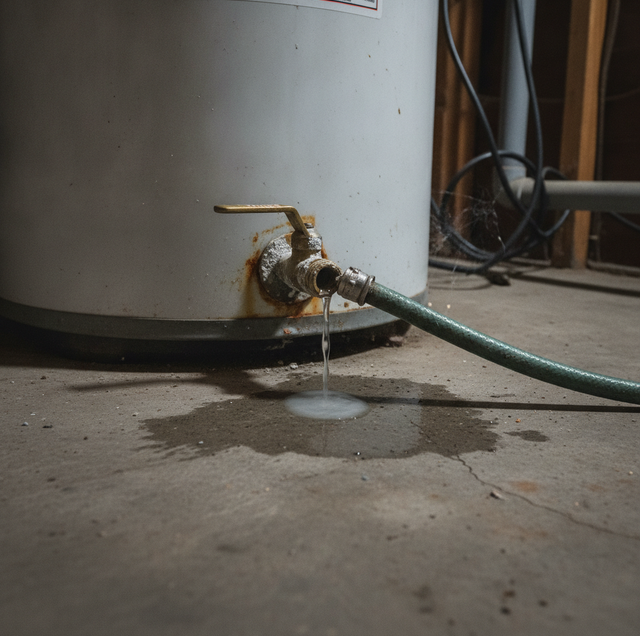
You are in the laundry room, and the water heater starts up with a sound like a kettle full of marbles, a low rumble punctuated by sharp pops. It is easy to imagine something is about to burst, but the noise itself is not the danger. It is a symptom, and it is telling you exactly what has been quietly building up inside the tank.
That sound has one main cause, and once you know what is making it, you know what to do about it and why it matters.
The Sound Is Water Boiling Under Sediment
Here is what is actually happening. The water coming into your tank carries dissolved minerals, and over time, those minerals, mostly calcium and magnesium, settle out and collect as a layer of sediment on the bottom of the tank, right over the burner or the lower heating element. When the heater fires, it heats the tank bottom through that layer. Water trapped underneath the sediment gets superheated and turns to steam, and as those steam bubbles force their way up through the sediment, they pop and rumble. It is the same physics as water boiling under a crust. The thicker the sediment, the louder and more persistent the noise.
So the popping is not the heater failing; it is the heater working through a layer of hardened mineral that should not be there. The noise is harmless at the moment. The sediment behind it is the real issue.
Why Hard Water Makes It Worse
If you live with hard water, this happens faster and louder, and there is no mystery to it. Harder water carries more dissolved minerals, so more sediment drops out and collects on the bottom of the tank, and it does so on an accelerated clock. In an area with some of the hardest water in the country, commonly in the range of a dozen and a half to thirty grains per gallon, a heater can build a noise-making sediment layer in a fraction of the time it would take in a soft-water region. That is why water heaters here so often start rumbling years before their owners expect it, and why regular flushing matters more in hard-water areas than almost anywhere.
| What you hear | What it usually means |
|---|---|
| Popping or crackling on heat-up | Water boiling under a sediment layer |
| Low rumbling as it runs | Heavier sediment shifting and steaming |
| Banging or hammering | Sometimes water pressure or pipe movement, not sediment |
| Sizzling near the base | Possible leak hitting the burner, check for water |
Why the Sediment Behind the Noise Matters
The noise is cosmetic, but what causes it is not. That insulating layer of sediment forces the heater to work harder and longer to heat the water, because it has to push heat through the mineral crust, which wastes energy and drives up the bill. It also traps heat against the steel at the bottom of the tank, which can stress and weaken it over time and shorten the heater's life. And as sediment fills the bottom, it takes up space that should hold hot water, so you get less hot water than the tank is rated for. A rumbling heater is an early warning that all of this is underway.
What Actually Fixes It
The cure for a sediment-noisy heater is flushing: draining the tank and rinsing the sediment out before it hardens into a solid crust. Caught early, a flush quiets the noise and restores efficiency. If the sediment has been baking on for years, it can harden to the point that flushing no longer clears it, and in a heater that is also aging, that is often the signal to plan a replacement rather than keep fighting the noise. Going forward, flushing on a schedule that matches your water, more often in hard water, keeps the sediment from ever building up enough to rumble.
Frequently Asked Questions
The noise itself is not dangerous, since it is just steam bubbling up through sediment. What it signals, a growing sediment layer, does cause problems: lost efficiency, less hot water, and added stress on the tank that can shorten its life. So it is not an emergency, but it is a reason to act before the buildup gets worse or the heater ages out.
Sometimes, by flushing the tank to clear the sediment, which many homeowners can do by shutting off the power or gas, connecting a hose to the drain valve, and draining and rinsing until the water runs clear. If the sediment is heavy or the drain valve is stuck, or you are not comfortable with the shut-off steps, it is worth having a plumber handle it. Once the sediment is gone, the noise usually goes with it.
Usually, because sediment has finally built up enough to trap and superheat water underneath it, which takes time to accumulate. In hard water, it can seem sudden because the buildup crosses a threshold and the popping starts in earnest. If it has never been flushed, years of minerals have likely collected, and the noise is the result of reaching a head.
If the sediment is still loose enough to rinse out, yes, flushing usually quiets it and restores performance. If it has hardened into a thick, baked-on crust after years without maintenance, flushing may not fully clear it, and the noise can persist. In an older heater with that much buildup, replacement is often the more practical path.
Not necessarily right away, but the sediment behind the noise does shorten a heater's life by overheating the tank bottom and making the unit work harder. If the heater is also getting up in years, a persistent rumble that flushing does not fix is a sign it is heading toward the end. Catching it early with a flush is what prevents that outcome.
Flush the tank on a schedule that fits your water, which, in hard water, means more often than the once-a-year general advice, often twice a year. A water softener also helps a great deal by removing much of the mineral before it reaches the tank, so far less sediment collects. Regular flushing plus softened water keeps a heater quiet and efficient for its full life.
The Noise Is the Messenger, Not the Problem
A popping, rumbling water heater is telling you that sediment has built up on the bottom of the tank, where trapped water boils and forces steam up through the layer. The sound is harmless, but the mineral behind it wastes energy, steals hot water, and shortens the tank's life, and hard water makes it happen fast. Flush the tank to clear it, keep flushing on a schedule that matches your water usage, and the heater will go back to running quietly and efficiently. Left alone, that same sediment quietly wastes energy and shortens the tank's life, which is why the rumble is worth acting on rather than tuning out.
If your water heater is rumbling, we can flush it, check the tank, and tell you honestly whether it has years left or is nearing the end. Frontier Plumbing serves Las Vegas, Henderson, and Enterprise. NSCB #286781. Call (702) 602-6705.