
Tank vs. Tankless Water Heater: Which Fits Your Household?
QUICK ANSWER: A tank water heater stores a set amount of hot water and is simpler and less expensive to install, but it can run out during heavy use and takes up floor space. A tankless unit heats water on demand, so it never runs out and saves space, lasts longer, and uses energy only when you draw hot water — but it costs more up front, may need electrical or gas upgrades, and has a flow-rate limit that can strain during simultaneous use. The right choice depends on your household size, how much hot water you use at once, your space, and how long you plan to stay. Both work well when sized correctly.
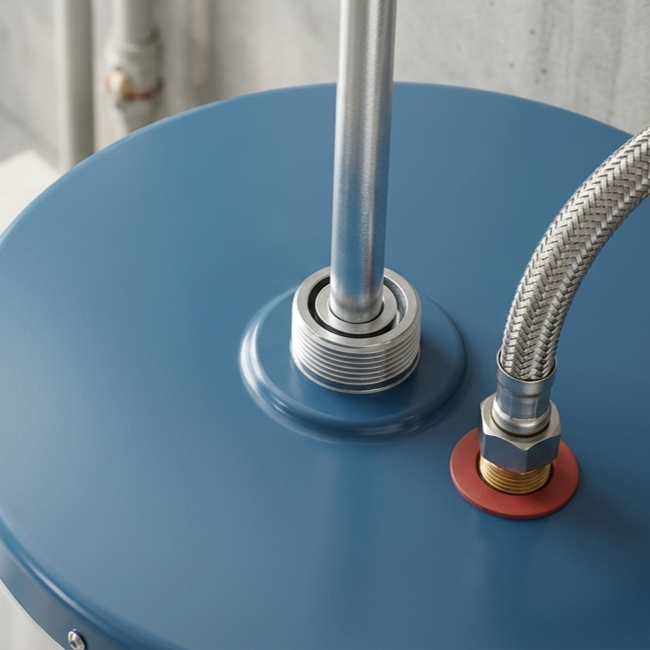
When it's time to replace a water heater, the big decision is no longer just what size — it's whether to stick with a traditional tank or switch to a tankless unit. Both deliver hot water reliably, but they do it in fundamentally different ways, and the better fit depends on how your household actually uses hot water.
How Each One Works
A tank water heater is the familiar setup: a large insulated tank holds a fixed amount of water and keeps it hot around the clock, ready whenever you turn the tap. When you draw it down, it refills and reheats.
A tankless unit holds no stored water. When you open a hot tap, water flows through the unit and is heated instantly by a powerful burner or element as it passes through. It heats only what you use, only when you use it. That core difference — stored versus on-demand — drives every other trade-off between the two.
Hot Water Supply
This is where the difference is most noticeable in daily life. A tank can run out: once you've used the stored hot water, you wait for it to recover, which is why a long shower or several back-to-back showers can leave the last person cold. The amount of hot water is capped by the tank size.
A tankless unit never runs out, because it heats continuously as water flows. You can shower as long as you like. The catch is flow rate: a tankless unit can only heat so many gallons per minute, so running several hot-water draws at once — two showers plus the dishwasher — can exceed its capacity and drop the temperature. A tank handles simultaneous demand from its reserve; a tankless system handles continuous demand but has a flow ceiling
| Factor | Tank | Tankless |
|---|---|---|
| Hot water supply | Limited by tank size | Endless, but flow-rate capped |
| Simultaneous use | Handles bursts from reserve | Can strain with many at once |
| Space | Takes floor space | Compact, wall-mounted |
| Lifespan | Around 8–12 years | Often 20+ years |
| Up-front cost | Lower | Higher |
| Install complexity | Simpler | May need gas/electrical upgrades |
| Energy use | Reheats stored water continuously | Heats only on demand |
Space, Lifespan, and Efficiency
A tankless unit is small and wall-mounted, freeing up the floor space a bulky tank occupies — a real benefit in a smaller home or a tight utility area. It also tends to last considerably longer, often 20 years or more, versus the 8-to-12-year range typical of tanks, partly because there's no standing tank of water to corrode.
On energy, a tankless unit only fires when you're drawing hot water, avoiding the standby losses of a tank that reheats stored water all day. A tank, by contrast, keeps its reserve hot whether you use it or not. The efficiency edge generally goes to tankless, though real-world savings depend on usage.
The Trade-Offs of Going Tankless
Tankless isn't automatically the winner, or everyone would have one. It costs more up front, both for the unit and often for installation, because it may require a larger gas line, additional venting, or an electrical upgrade to deliver the burst of power it needs. In hard-water areas, a tankless unit needs periodic descaling to prevent mineral buildup from reducing its performance and life. And if your household routinely runs multiple hot-water draws at the same time, the unit has to be sized — or you may need more than one — to keep up.
Tip: Think about your peak demand, not your average. The real question isn't how much hot water you use in a day, but how much you use at the same time. A household that often runs two showers plus an appliance at once needs a tankless unit sized for that, or a tank with enough reserve to cover the burst.
Matching It to Your Household
Start with how you use hot water. A larger household that frequently uses several fixtures at once, or one that simply wants endless showers and has the budget and the gas or electrical capacity, is a natural fit for tankless — especially if you plan to stay long enough to benefit from the longer lifespan and lower running costs. A household with simpler needs, a tighter up-front budget, or an installation where upgrades would be costly may be better served by a properly sized tank, which still delivers reliable hot water at a lower initial cost. Neither is the "right" answer universally; the right answer is the one matched to your demand, your space, and your plans for the home.
Frequently Asked Questions
Neither is universally better — they suit different needs. Tankless water heaters offer endless hot water, a longer lifespan, space savings, and lower standby energy use, but cost more upfront and have a flow-rate limit. A tank is cheaper to install and can handle simultaneous bursts from its reserve, but runs out of capacity under heavy use and takes more space. The better choice depends on your household.
It provides continuous hot water because it heats on demand rather than from a reserve, so you won't run out during a long shower. The limit is the flow rate: it can only heat a certain number of gallons per minute. If you exceed that by running several hot-water fixtures at once, the temperature can drop, so sizing for peak demand matters.
A conventional tank water heater typically lasts about 8 to 12 years, while a tankless unit often lasts 20 years or more. The tankless advantage comes partly from having no standing tank of water to corrode. Maintenance affects both flushing for tanks and descaling for tankless — and extends their usable life.
Because it often needs supporting upgrades. A tankless unit draws a large burst of power or gas to heat water instantly, which can require a bigger gas line, added venting, or an electrical upgrade. The unit itself also costs more than a comparable tank. Those up-front costs are the main trade-off against its longer life and lower running costs.
They need periodic descaling, especially in hard-water areas, to keep mineral buildup from reducing performance and shortening their life. Tanks need periodic flushing to remove sediment. Both benefit from regular maintenance; the type differs. In hard water, staying on top of tankless descaling is important to protect the investment.
It depends on usage patterns. A large family that often runs multiple hot-water fixtures at once needs either a tankless unit sized for that peak demand (sometimes more than one unit) or a tank with enough capacity to cover the bursts. Both can serve a large household well when properly sized; the key is matching the unit to peak simultaneous demand.
Pick the One That Fits How You Live
Tank and tankless water heaters both deliver reliable hot water, but they trade off differently: tanks are simpler and cheaper up front but limited by their reserve, while tankless units offer endless hot water, longer life, and space savings at a higher initial cost and with a flow-rate ceiling. Match the choice to your household's peak demand, your space, and how long you'll stay, and either can be the right call.
Deciding between a tank and tankless water heater? — Get sizing and installation guidance matched to your household's hot-water demand. Frontier Plumbing serves Las Vegas, Henderson, and Enterprise. NSCB #286781. Call (702) 602-6705.