
Signs Your Home Has Hard Water and What It's Doing
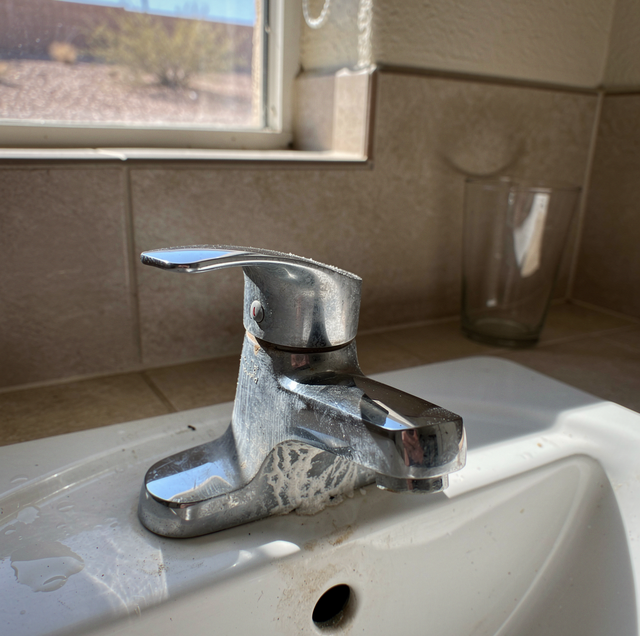
The white ring around your showerhead doesn't come off no matter how hard you scrub, and that's not a cleaning problem. It's a water problem. Most homeowners notice hard water in small, annoying ways long before they think to call it by name: a bathtub faucet crusted with chalky buildup, a glass that looks smudged straight out of the dishwasher, shampoo that won't foam up the way it used to. Each of those is a visible clue pointing to something happening out of sight, inside the pipes and appliances that carry water through your house every day.
Hard water simply means your water carries a higher-than-average load of dissolved calcium and magnesium. Plumbers measure that load in grains per gallon (gpg), and moderately hard starts around 3.5 gpg; water above 7 gpg is classified as hard, and anything past 10.5 gpg is very hard — homes on the harder end can test 15 to 30 gpg. Those minerals don't dissolve away when you use the water. They come back out of solution the moment water evaporates, heats up, or sits still, and that's where the visible signs start.
A Chalky White Crust Builds on Faucets and Showerheads
Run a finger along the base of a bathroom faucet or the holes of a showerhead, and you'll likely feel it before you see it: a gritty, off-white texture that wipes away with vinegar but returns within weeks. That crust is calcium carbonate, the same mineral that forms limestone, left behind every time water evaporates from a wet metal surface. Showerheads take the worst of it because hot water accelerates the process, and the tiny holes that shape the spray are exactly the size scale likes to plug first. A showerhead that used to spray in a clean, even pattern and now sputters or sprays sideways from one hole is usually due to mineral deposits blocking the others.
Water Spots and Film Show Up on Clean Glassware
Pull a glass straight from the dishwasher and hold it to the light. If it looks cloudy or speckled with white spots even though it just ran through a full cycle, the cause is almost always mineral content in the water rather than a cycle the dishwasher skipped. As droplets of hard water dry on glass and dishes, they leave behind the same dissolved minerals that coat your faucets, just in a thinner layer. Detergent formulas can only fight so much of that mineral film before they lose. This is also why glass shower doors haze over gray or white no matter how often they get squeegeed: every drop that dries on the glass leaves a trace, and traces add up fast on a surface that gets wet daily.
Soap and Shampoo Won't Work up a Real Lather
Hard water reacts with soap before you ever get the chance to use it. Calcium and magnesium ions bond with the fatty acids in soap and shampoo to form an insoluble compound called soap curd, better known as soap scum. That reaction eats up soap that would otherwise be turning into lather, which is why you end up rubbing in more shampoo or reaching for another squirt of body wash just to get suds going. Minerals in the water are neutralizing the soap before it ever gets the chance to foam.
Tip: If a bar of soap or a bottle of shampoo lathers instantly at a friend's house but barely foams at yours, that's a strong sign the difference is your water, not the product.
Skin Feels Dry, and Hair Feels Coated After Every Shower
That same soap curd doesn't just sit in the tub. A thin film of it clings to skin and hair after rinsing, since, unlike regular soap residue, it doesn't dissolve back into the rinse water. On skin, that film can trap in dryness and leave a tight, filmy feeling even minutes after you towel off. On hair, mineral deposits coat individual strands, which is why hair can feel dull, heavy, or straw-like even with a good conditioner. People sometimes assume they need a different shampoo or a heavier moisturizer when the actual issue is that minerals in the water are interfering with rinsing.
Kitchen Appliances Scale Up Faster Than They Should
Coffee makers, kettles, and dishwashers repeatedly heat water in a small, enclosed space, making them prime targets for scale buildup. Run hard water through a coffee maker for a few months, and you'll start to notice slower brew cycles, sputtering, or a metallic taste, all signs that mineral deposits are narrowing the internal tubing. Kettles develop a visible white or gray crust on the heating element that flakes off into your cup if you don't descale regularly. Dishwashers show it as a chalky film on the interior walls and, eventually, spray arms with clogged jets that no longer clean evenly. In each case, mineral buildup from the water is the more likely cause rather than a failing appliance.
Mineral Deposits Build Up Inside Your Pipes, Not Just on Fixtures
Everything visible on a faucet or a glass is also happening, invisibly, on the inside walls of your plumbing. Every time hard water flows through a pipe, it leaves behind a microscopic trace of calcium and magnesium, and heat speeds that process up considerably. Layer after layer, that trace turns into scale that clings to the interior surface the way plaque narrows an artery: the pipe's outer diameter never changes, but the usable channel for water keeps getting smaller. In copper and galvanized pipe, scale buildup can eventually restrict flow enough to cause water pressure to drop at fixtures far from any actual leak or valve problem. Loose scale flakes that break free also travel downstream and lodge in aerators, cartridges, and shower valve trim, which is one reason faucets and shower valves in hard-water homes tend to need repair more often than they should.
WARNING: A sudden pressure drop combined with discolored water can also point to a failing pipe rather than scale buildup. If flow loss appears quickly rather than gradually, treat it as a plumbing issue that warrants a professional look, not just a hard water symptom.
Water Heaters Absorb the Heaviest Damage From Hard Water
Nowhere does hard water do more damage than inside a water heater, because nowhere else does water sit still and get heated over and over in the same tank. In a tank-style heater, dissolved minerals settle out as sediment on the bottom, right where the burner or lower heating element does its work. That sediment layer acts like insulation between the flame and the water, so the heater has to run longer and burn more fuel or electricity to reach the same temperature. Water trapped beneath the sediment layer boils and rises through it in bursts, producing the popping or rumbling sound many hard water homes eventually hear. Every heating cycle also expands and contracts the tank and its fittings slightly, and a heavier mineral layer adds mechanical stress to that cycle, which shortens the tank's working life.
Tankless water heaters face a version of the same problem concentrated into much smaller passages. Instead of a tank, the water flows through a narrow heat exchanger every time you turn on hot water, and any scale that forms there restricts flow through channels that don't have much room to spare. That's why manufacturers recommend periodic descaling flushes for tankless units in hard water conditions, closer to once a year rather than the occasional flush a tank-style heater might tolerate. Regular preventive maintenance on either type keeps sediment from building past the point where a simple flush can clear it.
Testing and Treating Hard Water Before It Reaches Your Plumbing
A simple test strip or a water hardness kit gives you a grains-per-gallon reading in a couple of minutes, and it's worth doing before you assume every faucet issue or dull glass is hardness-related. Once you know the number, the fix depends on what's actually causing it. A water softener addresses hardness directly by exchanging calcium and magnesium ions for sodium ions, preventing scale from forming in the first place. Whole-home filtration addresses different concerns, such as taste, chlorine, and sediment, and is sometimes paired with a softener rather than used in place of one. Either system works best installed ahead of your water heater, so the appliance that takes the hardest hit from hard water is also the first one protected.
Frequently Asked Questions
A salt-based softener works by exchanging calcium and magnesium ions for sodium ions, so treated water does pick up a small amount of sodium in the process. Most people never notice a taste difference, but if you're watching sodium intake for health reasons, pairing the softener with a reverse osmosis filter at the kitchen tap removes nearly all of it from the water used for drinking and cooking, while the softener continues to protect the rest of the plumbing.
Boiling only removes what's called temporary hardness, caused by dissolved calcium bicarbonate, and even then it doesn't remove the minerals from your kitchen. It just moves them out of the water and onto the inside of your pot or kettle as scale. Permanent hardness from calcium sulfate and similar compounds doesn't break down with heat at all, so boiling isn't a practical way to soften water for everyday use.
Yes. Calcium and magnesium are naturally occurring minerals, not contaminants, and drinking hard water isn't considered a health risk. The concerns with hard water are almost entirely about what it does to fixtures, appliances, and plumbing over time, not what it does to the people drinking it.
Hardness itself usually reads as a faint mineral or metallic note rather than a strong flavor. If your water tastes noticeably like chlorine or has an off smell, that's a separate issue tied to disinfection chemicals or dissolved solids rather than calcium and magnesium, and it calls for a different type of filtration than a water softener provides.
It can. Mineral flakes that break loose from scale elsewhere in the plumbing often travel to the toilet's fill valve, where they can keep it from sealing fully or restrict the tank's refill speed. A toilet that suddenly runs longer than it used to, or fills unusually slowly, is worth having checked rather than just replacing the flapper and hoping the problem was something else.
Not quite. Salt-free conditioners use a process called template-assisted crystallization to convert dissolved calcium and magnesium into microscopic crystals that remain suspended in the water rather than sticking to pipe walls and fixtures, but the minerals are still present when the water leaves the tap. A traditional softener actually removes those minerals, exchanging them for sodium through resin beads, which is why it also clears up soap-lather and skin-and-hair issues that a conditioner doesn't fully address. Conditioners appeal to homeowners who want scale protection without adding sodium to their water, but sizing one requires matching its capacity to your household's gpg reading and daily water use, not just picking a model off the shelf.
Schedule a hard water and plumbing inspection — a technician will check your fixtures, water heater, and pipes for scale damage and walk you through softener and filtration options. Frontier Plumbing serves Las Vegas, Henderson, and Enterprise. NSCB #286781. Call (702) 602-6705.