
Signs Your Pipes Are Due for Repiping (Not Just a Repair)
A single leak under a sink or a toilet that won't stop running is a repair job. A plumber patches the part, and the house goes back to normal. But some warning signs don't point to one bad fixture. They point to the pipe itself running out of usable life, and no amount of patching changes that math. Knowing the difference between an isolated repair and a system that's telling you it's done matters, because chasing the same leak type across different rooms over a year or two usually costs more in the long run than addressing the pipe network once.
This guide walks through the specific signs that tend to mean repiping, not spot repair, and explains why pipe material and age set the timeline whether or not any single leak has shown up yet.
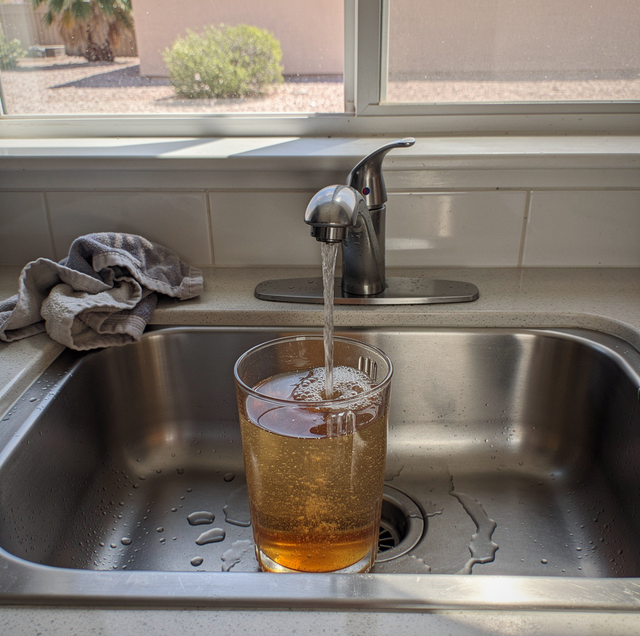
Discolored Water Signals More Than a Bad Filter
Rusty, brown, or yellow-tinted water is one of the clearest signs of aging metal pipe. Inside galvanized steel supply lines, the zinc coating that once protected the steel wears away over decades, exposing bare metal to the water moving through it. That bare steel rusts from the inside out, and flakes of rust and mineral scale get carried along with the water until they show up at your faucet.
A one-time discoloration after a repair elsewhere in the system, or after the utility flushes a main, usually clears within a day. What matters is a pattern: water that runs rusty every time you first turn on a tap after several hours, water that stays cloudy or tinted no matter how long you run it, or discoloration that shows up at multiple fixtures rather than just one. That pattern means the interior of the pipe itself has corroded enough to be shedding material continuously, not that something briefly stirred up sediment.
Copper pipe can also discolor water, though less often and for a different reason. Greenish-blue staining on fixtures or at water points indicates copper is being dissolved by unusually acidic or aggressive water chemistry, which is a different failure mode than the rust flaking typical of old galvanized line.
Frequent Pinhole Leaks Point to a Bigger Pattern
Every pipe network develops the occasional leak eventually. The distinction that matters is frequency and spread. One pinhole leak in a copper line is a repair. A second one turning up in an unrelated part of the house within the same year, and a third the year after that, is a pattern, because the water chemistry and internal corrosion process that produced the first leak is acting on every other run of the same pipe at the same time.
Pinhole leaks form when internal corrosion thins a small section of pipe wall until pressurized water finds its way through. Once a plumber has repaired two or three of these in different locations, the honest read is that the rest of the supply lines are somewhere on the same timeline, just a little behind. Patching each pinhole as it appears means paying for labor and drywall repair repeatedly rather than once, and it does nothing to slow the corrosion occurring inside every other section of pipe you can't see.
Low Water Pressure From Corrosion Buildup
Weak pressure is more often blamed on the municipal supply or an aging water heater than on the pipes themselves, but internal corrosion is one of the most common causes, especially in older galvanized systems. As rust and mineral scale build up along the interior wall of a pipe, the usable diameter shrinks. A pipe that started with a clear three-quarter-inch bore can narrow enough over the decades to meaningfully restrict flow, much like a clogged artery restricts blood flow.
The tell here is that the pressure has dropped gradually across the whole house rather than at one fixture. If only the kitchen faucet runs weakly, that's likely due to an aerator clog or a fixture-specific problem. If pressure has faded with every tap over years, and a plumber has ruled out the pressure regulator and the municipal supply as the cause, corrosion narrowing the inside of the pipe is the most likely remaining explanation. Homes with extreme hard water see this scale buildup accelerate, since mineral-heavy water lays down deposits on pipe walls faster than softer water does, on top of any corrosion already occurring.
Visible Corrosion on Exposed Pipes
Any section of pipe you can actually see, under a sink, in a utility closet, in a garage, or in a basement, gives you a preview of what's likely happening inside the pipe walls you can't see. Green or white crusty buildup on copper fittings, flaking rust on galvanized pipe, or a dimpled, pitted texture on any metal pipe surface are all signs of active corrosion.
What you see on the outside of a fitting is usually less advanced than what's happening on the inside, where water is in constant contact with the metal. A joint showing visible corrosion has typically had that same corrosive process working on the pipe interior for longer, since interior corrosion generally starts before it becomes visible from the outside. Treat visible corrosion on any accessible pipe as a reason to have a plumber check what's happening in the walls, rather than as an isolated cosmetic issue at that one joint.
How Long Different Pipe Materials Actually Last
Pipe material sets the outer boundary on how long a system can reasonably be expected to perform, regardless of maintenance.
Galvanized steel: Common in homes built before the 1960s, galvanized steel pipe typically has a service life of 40 to 50 years, though the protective zinc coating can wear thin well before then, especially in aggressive water conditions. Once a galvanized system passes the half-century mark, internal corrosion and narrowing bore diameter are less a possibility than an expectation.
Copper: Properly installed copper pipe often lasts 50 years or more and remains one of the more durable residential materials available. Its main vulnerability is pinhole leaks caused by aggressive water chemistry, which can considerably shorten its lifespan in homes with corrosive water, regardless of the pipe's age.
Polybutylene: Installed in a large number of homes between the late 1970s and mid-1990s before manufacturers discontinued it, polybutylene pipe is prone to internal corrosion when exposed to the chlorine and chloramine used in municipal water treatment. Unlike galvanized steel or copper, polybutylene's failures tend to happen abruptly rather than as a slow, predictable decline, which is part of why it fell out of use and why many insurers now ask directly whether a home still has it.
If you know or suspect your home has one of these materials and it's approaching or past its expected range, that age alone is a legitimate reason to have the system evaluated, even before any leak shows up.
One Bad Pipe vs. a Failing System
The hardest part of this decision is telling a single unlucky failure apart from a system-wide problem, and the honest answer is that no single sign is proof on its own. What separates the two is convergence: multiple signs showing up together, in different parts of the house, over a relatively short span of time.
A single pinhole leak in an otherwise sound copper system, caused by a manufacturing defect in a fitting or an unusual local stress point, warrants repair. Rusty water at one fixture right after a water heater was replaced, when a technician likely disturbed some old sediment, is a repair. But rusty water at several fixtures, combined with pressure that's faded over the years and a visible corrosion patch on an accessible pipe, describes a pipe network that's failing broadly rather than a bad spot that got unlucky.
A plumber can confirm your situation by inspecting an accessible pipe, checking pressure at multiple fixtures, and, in some cases, running a small camera along a section of the line. That inspection is worth doing before assuming either outcome, since treating a system-wide problem as a series of one-off repairs wastes money over time, and treating one unlucky failure as a reason to repipe an otherwise sound system is an overcorrection in the other direction.
What Happens If You Wait
Pipe corrosion and material breakdown don't pause while you decide what to do. Each additional pinhole leak left unaddressed risks water damage to drywall, flooring, and framing, and that damage tends to compound the longer water sits before it's noticed. A slow pressure decline from a narrowing pipe interior only gets slower.
Waiting isn't automatically the wrong call. If your home shows one isolated sign and a plumber's inspection doesn't reveal a broader pattern, monitoring the situation and addressing repairs as they arise can be entirely reasonable, particularly with a durable material like copper that's still well within its expected range. The point isn't that repiping is always the answer the moment any sign appears. It's that the decision should follow an actual inspection of pipe material, age, and condition, rather than either ignoring a real pattern or replacing a sound system out of caution alone.
Frequently Asked Questions
Sometimes, if the corrosion is truly limited to one section, such as a single addition or a run that was installed with a different material than the rest of the house. The trade-off is that a partial repipe leaves the older pipe in place elsewhere, so if the underlying water chemistry or pipe age caused the problem in one section, the same conditions are likely affecting the remaining original pipe as well.
A softener addresses mineral scale buildup from hard water, which can help preserve the usable pipe diameter over time, but it doesn't reverse corrosion that has already occurred or address the separate chemical processes, such as chlorine interacting with polybutylene or acidic water dissolving copper, that drive pipe failure in other materials.
A plumber can usually identify pipe material from an accessible section, such as where a line enters a water heater or exits at a hose bib, using a magnet to check for steel, visual inspection for copper's distinct color, or the gray, semi-flexible feel of polybutylene where it's exposed. A home's building permit records or the original construction date can also narrow down likely materials before any inspection.
Standard homeowners insurance typically covers sudden water damage caused by a pipe failure but generally excludes the cost of replacing the worn-out pipe itself, since gradual corrosion and material deterioration are treated as maintenance issues rather than covered losses. Some insurers also decline to write new policies on homes with known polybutylene pipe still in place.
Most whole-home repipes take between a few days and a week, depending on the size of the house and how much of the new line can run through the open attic or crawlspace versus through finished walls that need to be opened and patched afterward.
Every pipe material has a finite service life, so yes, even a fresh repipe will eventually reach the end of its expected range decades down the road. The advantage of a full repipe is that every section starts on the same clock at the same time, which is part of why the warning signs in an aging system tend to cluster rather than trickle in one at a time, as they did with the original pipe.
Schedule a whole-home pipe inspection — a licensed plumber can confirm whether what you're seeing is an isolated repair or a system that's due for repiping. Frontier Plumbing serves Las Vegas, Henderson, and Enterprise. NSCB #286781. Call (702) 602-6705.