
Shower Water Turns Cold or Scalding? Here's the Mechanism
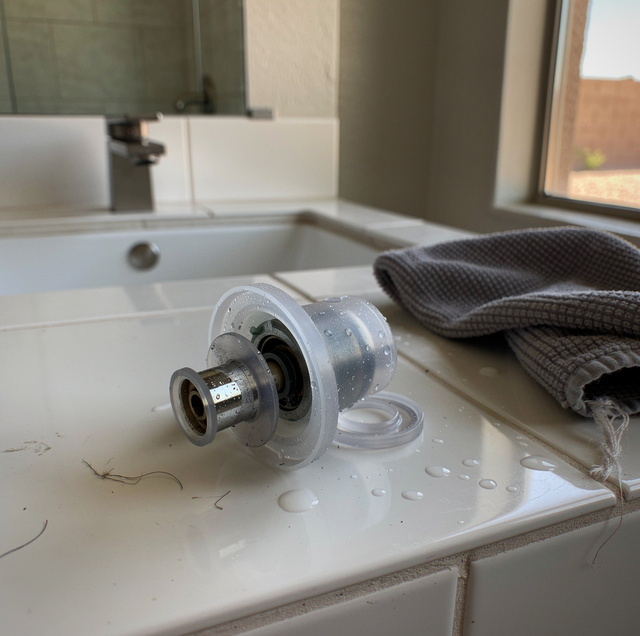
You are mid-shower, shampoo still in your hair, and the water either drops to uncomfortably cold or spikes hot enough to make you jump back against the tile. It happens fast, often right when a toilet flushes somewhere else in the house or a washing machine kicks into a fill cycle. If this keeps happening, the swing isn't random. Your shower has a valve whose sole job is to prevent exactly this kind of shift, and when the temperature jumps anyway, that valve is either being overwhelmed by a demand spike it can't fully absorb, or it's no longer doing its job properly.
Understanding what that valve does, and what causes it to fail, tells you which of three things you're dealing with: a quick adjustment, a cartridge swap, or something happening further upstream in your water heater.
The Valve Behind Every Shower Temperature
Modern showers rely on one of two valve types buried in the wall behind the shower handle: a pressure-balancing valve or a thermostatic mixing valve. Both blend hot and cold water into a single stream, but they solve the temperature problem in different ways.
A pressure-balancing valve uses a sliding piston or diaphragm inside the valve body. As hot and cold water enter, the piston moves to equalize the pressure of each supply line before they mix. If cold-water pressure suddenly drops because another fixture in the house just opened, the piston senses the imbalance and slides to proportionally reduce the hot-water flow, keeping the ratio between hot and cold roughly steady even though the actual volume of water has changed.
A thermostatic mixing valve goes a step further. Instead of only balancing pressure, it uses a wax or bimetal element that expands and contracts with actual water temperature, adjusting the hot and cold inputs to maintain a set output temperature regardless of what's happening upstream. Thermostatic valves are more common in higher-end installations. They are generally better at maintaining a steady output under simultaneous demand, since they respond to temperature directly rather than to pressure alone.
Both valve types include an adjustable high-limit stop, a small mechanical piece that caps how far the handle can turn toward all-hot. That stop is what keeps a shower from ever reaching true tank temperature even if someone cranks the handle all the way, and it's a big part of why a properly calibrated valve should never let you get scalded no matter what else is running in the house.
Why A Fixture Elsewhere Causes A Temperature Swing
The classic trigger for a cold-water shock in the shower is a toilet flush, a dishwasher fill, or a washing machine drawing cold water at the same moment someone is showering. Here's the mechanical chain: your home's plumbing runs on a shared cold-water supply line. When a toilet tank refills, it pulls a burst of cold water through that shared line. For a few seconds, less cold water is available to the shower valve, so the ratio of hot to cold shifts toward hot, and the shower gets hotter, sometimes sharply.
A well-functioning pressure-balancing or thermostatic valve is built to counteract exactly this. It should sense the drop in cold-water pressure or the resulting temperature shift and adjust the mix within a second or two, holding the output close to where it was. When you feel a real temperature spike or a cold shock that takes several seconds to recover from, the valve either isn't calibrated correctly for your home's pressure and supply setup, or something inside it is preventing it from responding as it's designed to.
Homes with lower static water pressure or smaller-diameter supply lines feel this effect more sharply, since the same fixture draw represents a bigger percentage swing in available flow. If your cold-water pressure runs on the low side to begin with, a single toilet flush can draw a larger share of what's left, leaving the valve less room to compensate before you feel it.
When Sediment And Scale Are The Actual Cause
Hard water is one of the more common reasons a previously reliable shower valve starts misbehaving. As mineral-heavy water passes through the valve cartridge over months and years, scale deposits build up on the moving parts, the piston in a pressure-balancing valve or the thermostatic element in a mixing valve. That buildup does two things: it narrows the internal passages, restricting how much water can flow through at a given pressure, and it stiffens the moving parts. Hence, they respond more slowly to changes in pressure or temperature.
A valve with a scaled-up piston might still function most of the time, but its ability to react in the split second after a toilet flush gets noticeably slower, which is exactly when you feel the temperature swing. In more advanced cases, scale can jam the piston partway, so the valve gets stuck favoring hot or cold rather than sliding freely between the two.
Sediment from an aging water heater tank or corroding pipe can add to the same problem, since loose particles moving through the supply lines settle inside the valve cartridge alongside mineral scale. Over enough thermal cycling, as pipes and fittings repeatedly expand and contract with hot and cold use, small deposits and residue can also work loose from elsewhere in the system and travel downstream into the valve, adding to the restriction. A valve that used to hold steady and now hunts between hot and cold on its own, even with no other fixture running, often indicates that scale or debris has built up inside the cartridge rather than that the valve design itself has failed.
When The Water Heater Can't Keep Up
Not every temperature swing is about the shower valve at all. If your water heater is too small for the household's simultaneous hot-water demand, or its heating element or burner is struggling, running a shower at the same time as a dishwasher, another shower, or a load of laundry on hot can deplete the available hot water faster than the tank can recover it. In that case, the shower may run progressively cooler over several minutes rather than swinging sharply for a few seconds, which is a useful distinction: a fast, brief shock usually points to the valve reacting to another fixture, while a slow drift toward lukewarm over the course of a shower points toward the heater struggling to keep pace with demand.
A tank-style water heater has a fixed recovery rate, meaning it can only reheat incoming cold water so quickly once the hot layer at the top has been drawn down. Two showers running back-to-back, or a shower alongside a dishwasher cycle, can outpace that recovery rate in a household with an undersized tank or one nearing the end of its service life, when sediment buildup on the tank bottom has reduced the efficiency with which the burner or element transfers heat.
Distinguishing between a valve problem and a heater problem matters because the fix is completely different. A scaled or worn valve needs cartridge service. An undersized or failing water heater needs heating capacity, not a new shower valve, and swapping the valve won't address the actual issue.
What A Failing Anti-Scald Valve Feels Like
An anti-scald valve, whether it's a dedicated thermostatic model or a pressure-balancing valve doing the same job, is designed to protect against sudden hot-water spikes specifically. Its high-limit stop should physically prevent the handle from delivering water above a set ceiling, even if someone else in the house drains most of the cold supply at once.
When that protection is working correctly, you might notice a brief, mild shift when another fixture draws water, but nothing sharp enough to make you jump. When it's failing, the signs tend to include a noticeable delay before the valve corrects itself, a temperature swing sharp enough to be uncomfortable or dangerous rather than a small dip, a handle that feels loose, gritty, or hard to turn smoothly through its range, or a shower that settles at a temperature that no longer matches where the handle is pointed.
Any of those signs mean the internal mechanism, whether it's the piston, the thermostatic element, or the high-limit stop itself, is no longer doing its job precisely. Because the entire point of this valve is to prevent burns and cold shocks, a valve that's clearly misbehaving isn't a cosmetic annoyance. It's a safety component that isn't performing the one function it exists for.
Cartridge Service Versus Full Valve Replacement
Many pressure-balancing and thermostatic valves are built around a replaceable cartridge, meaning the moving internal parts sit inside a removable unit rather than being machined directly into the valve body. When scale or sediment is the main issue, and the valve body itself is otherwise sound, pulling and replacing that cartridge often restores normal, responsive mixing without touching the tile or the valve body behind the wall.
Full valve replacement becomes the better path when the valve body itself is worn, corroded, or damaged, when the model is old enough that replacement cartridges are no longer made for it, or when a cartridge swap doesn't resolve the swings because the real cause is a mismatch between the valve's design and your home's water pressure. A plumber can pressure-test the line and inspect the valve body directly to tell which situation applies before opening anything up.
If your home was built before pressure-balancing or thermostatic valves became a standard code requirement, it's also worth having a plumber confirm which type of valve is currently installed, since some older shower controls lack anti-scald protection and can be upgraded during a routine repair.
Frequently Asked Questions
A toilet refill draws a burst of cold water through the shared supply line, temporarily reducing the amount of cold water reaching the shower valve. A properly functioning valve corrects this within a second or two; a slow or scale-restricted valve takes longer, so you feel a larger, longer temperature spike.
Yes. Mineral deposits build up inside the valve cartridge over time, coating the piston or thermostatic element, narrowing internal passages, and slowing the valve's response to pressure or temperature changes.
It can be a safety issue, particularly the scalding side. The valve's high-limit stop is specifically designed to prevent burn-level water temperatures, so a valve that lets a sharp, hot spike through is not performing its main protective function.
A quick, sharp swing that occurs the moment another fixture turns on usually indicates the valve reacting to a pressure change. A gradual drift toward lukewarm over several minutes, especially with multiple hot-water fixtures running, suggests the water heater is struggling to keep up with demand.
In most cases where scale or sediment is the cause, cartridge replacement restores normal function without requiring replacement of the valve body. A full valve swap is only needed when the body itself is worn, corroded, or incompatible with a replacement cartridge.
Often, yes. Pressure testing the supply lines, checking the water heater's recovery behavior, and testing the valve's response with another fixture running can narrow down the cause before anything needs to be removed from behind the tile.
Get your shower valve inspected — a quick diagnostic identifies whether scale, pressure, or your water heater is behind the temperature swings. Frontier Plumbing serves Las Vegas, Henderson, and Enterprise. NSCB #286781. Call (702) 602-6705.