
What a Plumber Checks on an Annual Visit: All 7 Stops
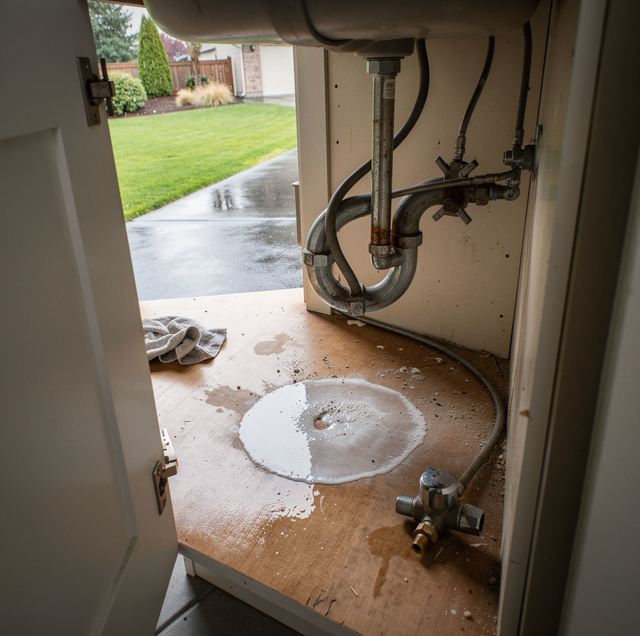
The angle stop under your bathroom sink has not been turned since the house was built. The chrome is dull where the packing nut meets the stem, and a faint white ring sits on the cabinet floor below. Nothing is dripping today. A plumber on a maintenance visit still puts a wrench on that stop, because that ring is evidence that water once left the fitting.
That round is not a repair call under a different name. It is a fixed circuit of your house, run against a list of seven stops: sinks, tubs, showers, toilets, the water heater, the main water line, and the sewer line. Below are each stop in turn and what your plumber looks for that you would not notice yourself.
A Maintenance Visit Is an Inspection, Not a Repair Call
The word carrying the weight there is inspection. Preventive maintenance is the inspection and adjustment of plumbing to make corrections before flaws lead to leaks, backups, overflows, low pressure, or slow drains. Very little gets torn out of your walls.
So the visit produces a list rather than a pile of replaced parts. Some stops end in a two-minute adjustment: a packing nut snugged, a supply line swapped, a flapper changed. Others end in a note, a date to watch, and a line on the report you take away with you.
Sinks Are Checked From the Cabinet Floor Upward, Not the Faucet Down
A plumber starts under the sink. The cabinet floor is where evidence collects, and a dry cabinet with a swollen particleboard seam under the trap means water sat there long enough to soak in and then evaporate. Both angle stops get turned, because a multi-turn stop left open for fifteen years seizes at the stem and the packing weeps the first time anyone closes it. Braided supply lines get read by date stamp and by feel: the rubber core inside the stainless braid stiffens with age, and a bulge under the braid is the last warning you get before a burst.
Above the counter, the aerator comes off. Hard water mineralizes on pipes, counters, and fixtures, and the screen in an aerator is the first place a house shows it, because that mesh is finer than anything else the water passes through. A faucet that has lost half its flow while every other tap in the house runs normally is usually clogged with a screen and nothing worse. The trap and the tailpiece get checked for the slow weep that never reaches your floor because the cabinet absorbs it first.
Tubs and Showers Hide Their Leaks Behind the Wall
A tub or shower keeps most of its plumbing behind the wall, so the inspection works the reachable parts and infers the rest. The valve gets cycled through its full arc, hot to cold, because a pressure-balancing or thermostatic cartridge sitting in one position for years scales into place and refuses the last quarter turn. The tub spout diverter gets worked 20 times, since the worn rubber there sends part of the shower flow down the spout and doubles the amount used, without changing anything you can see. The overflow plate comes off, and the gasket behind it is checked by hand because that gasket leaks only when the tub fills deep.
Grout and caulk get read as a water barrier, not as trim. A hairline gap at the tub-to-tile joint lets water into the framing beneath your tub every time someone showers.
The drain and the shoe beneath the tub are the parts nobody can see. A slow tub with a clean strainer usually points at the trap arm or the shoe gasket, so a plumber fills your tub and dumps it in one go, listening for the gurgle that tells you the vent is partly blocked, not the drain.
Toilets Are the Quietest Water Wasters in the Whole House
A toilet that runs wastes more water than any other fixture in the house, and once the flapper seal has gone soft it does that silently, passing water too slowly to trigger a refill you can hear. The test is dye in the tank, with 10 minutes of waiting. Color in the bowl means the flapper is passing. Color that takes an hour to show means the seal is closing, but only just, and that toilet goes on the watch list.
Then the bowl gets rocked. A toilet that shifts under hand pressure has either loose closet bolts or a wax seal squashed flat and no longer sealing the horn to the flange. Neither one shows on your floor until the subfloor has been wet for months. The fill valve gets timed as well, since a valve that takes 90 seconds to shut off is on its way out, and the tank-to-bowl bolts get checked for the weep that stains the porcelain behind them.
The Main Water Line and the Valve Nobody Ever Turns
A main shutoff earns its keep on one day only, the worst day of a plumbing system's life, which is exactly why a maintenance visit exercises it. An old gate valve untouched for fifteen years does not simply stay stiff. The brass stem corrodes into the packing, and the gate can shear off the stem and drop into the body, so the handle spins freely while the valve stays permanently open. A plumber closes it fully, opens it fully, watches the packing for a weep, and makes sure you know where it is before you need it at two in the morning.
Static pressure gets read at a hose bib with a gauge, because a regulator on its way out shows up as little pressure, no pressure, or too much pressure, and water hammer heard in the walls or in a valve is often the first sign. The water heater sits on the same round: age, connections, the anode, T&P valve, flue, and burner compartment all get looked at. The meter is the last stop of the three. Every fixture is closed, a photograph of the dial is taken, another is taken an hour later, and any movement is a leak that has not surfaced yet.
WARNING: A water heater's temperature-and-pressure valve and its gas connections are opened by a plumber, never by a homeowner, because T&P discharge is scalding and a disturbed gas fitting can leak.
Sewer Line Trouble Shows Up First at Other Fixtures
The sewer line is the only stop on the list that cannot be judged from inside your house. What a plumber has at the cleanout is flow, and flow tells less than people expect, because a line that drains acceptably at one fixture can still carry a belly full of standing water two feet down.
So the reading here is symptomatic. Two fixtures on one branch running slow at the same time, a toilet that gurgles when the washing machine drains, sewage odor in a bathroom nobody uses: those move the line from a look to a camera. Roots enter at joints, and a hairline separation is already opening enough for a root.
What Goes Wrong Between One Visit and the Next?
Nothing on this list fails on a schedule. What changes between one year and the next is what your water has been doing to the parts in between, and in a hard-water house that is measurable. Mineral scale builds up on pipes, counters, and fixtures, thickest at every restriction, so aerators plug, cartridges stiffen, flapper seats roughen, and the components wear out before the life they were built for.
That is the argument for making the round annual instead of occasional. Three things come out of it: a list of what was adjusted on the spot, a list of what is worn but still working, and a date for the single item that will not survive another year. Your plumber writes the first two. You decide what happens with the third.
Frequently Asked Questions
Once a year suits most houses. Two conditions shorten it: a home with a galvanized supply forty years old, and a property left empty for months, since dry traps let sewer gas into your rooms. If your house is in either group, ask your plumber for six months.
For the first fifteen minutes, ideally. That is when you say what the house has been doing: the shower that went cold last month, the toilet you jiggle, the smell in your laundry room after a wash load. None of that shows on a fixture that day, and it changes where the plumber spends your hour.
Briefly, and twice. Once at the main, to prove the valve closes and reopens, and once at individual angle stops to test them the same way. Each interruption runs seconds, not minutes. If anyone in your home depends on a medical device that needs water, say so when you book, and your visit gets sequenced around it.
Clear the cabinet under every sink, clear the floor around your water heater, and leave the side gate open so the hose bib and the cleanout are reachable. If you have a recirculation pump, leave it running so your plumber can hear it. Write down anything odd you have noticed, even the symptoms that stopped.
No, and the two get confused because both begin at the same cleanout. The visit measures how your drains run and records what it finds. Clearing a line is separate work with a cable or a jetter and its own appointment. An inspection that ends with someone clearing a blockage is no longer an inspection, so your plumber books it as a return trip after you read the list.
Nothing gets repaired on the spot without your say-so, and most findings do not call for it. The list sorts them three ways: fix now, fix this year, watch. A failing pressure regulator lands in the first group because that valve controls the pressure reaching every fixture in your house, and pipes, valves, and appliances only behave as they were built to while water arrives at the pressure they were designed for. A stiff angle stop or a worn flapper can wait, provided somebody writes down which one it was and hands you the note.
Book a preventative maintenance visit — a seven-stop round of the fixtures, the water heater, the main line and the sewer line, with a written list at the end. Frontier Plumbing serves Las Vegas, Henderson, and Enterprise. NSCB #286781. Call