
Toilet Repair or Replacement? The Signs That Decide
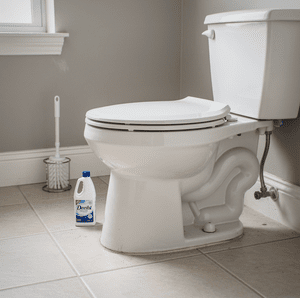
A toilet fails in two very different ways, and telling them apart decides whether a plumber reaches for a replacement part or a whole new fixture. One kind of failure lives entirely inside the tank: a flapper that no longer seals, a fill valve that has given out. Swapping that one part solves the whole problem. The other kind lives in the fired ceramic body of the toilet itself, the tank or the bowl that holds everything else together, and ceramic does not patch. Once it cracks, the bowl or the tank gets replaced, and a cracked bowl takes the whole toilet with it. The table below sorts the common failures into those two groups, and the sections after it explain what separates a fixable fault from one that ends the toilet.
| Situation | Repair or Replace |
|---|---|
| Running or leaking internal parts (flapper, fill valve) | Repair: swap the failed part |
| A rocking toilet or a failed wax seal | Repair: reset the base and reseal it |
| A cracked tank | Replace the tank, or the toilet if a matching tank is no longer made |
| A cracked bowl | Replace: the bowl is not sold as a separate part, so a crack there ends the toilet |
| Repeated clogs traced to an older low-flow design | Points to replacement once an obstruction, the drain line, and scaled jets are ruled out |
| Scale-clogged rim jets | Clear them first, and check the fill valve and flapper seat at the same time |
| Discontinued parts for the model | Replace: only when it is a proprietary flush valve or tank gasket that is no longer made |
| A remodel already underway | A reasonable point to replace, even if the toilet still works |
Which Parts Are Simple to Replace and Which Failures End a Toilet
Everything that moves inside a toilet tank is a separate part, sold separately and meant to be swapped out over the life of the fixture. The flapper, the fill valve, the flush valve seat, and the flush handle each wear at their own pace, and each one comes out and goes back in without touching the tank or bowl underneath it. A toilet that just keeps running traces to one of those internal parts, not to the tank or bowl itself. None of that work asks anything of the ceramic body holding it.
The tank and bowl are a different category entirely. They are single-fired ceramic pieces with no seams to reseal and no patch that holds against the water; a full tank or bowl keeps sitting on it. A hairline crack in that material can lengthen over time and with temperature changes, and it does not knit back together or respond to sealant applied from the outside. A crack through the bowl ends the toilet. A crack through the tank ends the tank, and on a model whose tank is still made, a matching tank replaces it without pulling the bowl. Fine surface crazing in the glaze that holds no water is cosmetic.
Hairline Cracks and How to Find Them
A hairline crack can weep for a long while or give way at once; its size says nothing about which. It shows up around the bolt holes where the tank bolts to the bowl, along the base where the bowl meets the floor, or inside the tank wall near the flush valve opening, points where over-tightened bolts, a rocking or uneven base, an impact, or a sudden temperature change put the ceramic under load, and that is where a crack starts when one of those is the cause.
A tank or bowl with a hairline crack can fail all at once under the weight of a full tank and flood the floor. Shut off the supply valve and have a plumber replace the cracked piece rather than wait and see.
Check for a crack by running a hand along the base for a damp line or a chalky white trace where mineral in leaking water has dried, and look over the outside of the tank and bowl for the same kind of trace. A small crack may only weep once the tank is full, so a toilet that looks dry at first glance can still be cracked. Feeling for dampness at the base and around the tank bolts catches it earlier than waiting for a puddle on the floor.
Flush Performance and Older Designs
Not every toilet that clogs repeatedly has a broken part. Older low-flow toilets, especially the first generation built to flush with less water, were fitted with a narrower trapway and a flatter bowl than current designs, and that geometry moves waste through less completely. Repairing the internal parts on one of these does nothing for the trapway itself, so on a toilet whose trapway and drain line check clear, repeated clogging on a normal flush points to the design underneath the toilet, not to a failed part, and no internal repair changes that.
Mineral content complicates the same call. Inside a toilet, mineral coats the rim jets, the small openings under the rim that direct water into the bowl on a flush. Where the mineral content is low, a crust in the jets is a weak explanation for weak flush performance; where it runs high, the jets, the fill valve washer and the flapper seat all collect it, so clogged rim jets are worth checking against those two parts before assuming the trapway design is the limit. Clearing scale is a repair; a design limit underneath it is not, and a toilet can carry both problems at once.
Rough-In Size When Replacing
Replacing a toilet means matching the rough-in measurements, not just picking a model that looks like the old one. The rough-in is the distance from the finished wall behind the toilet to the center of the two bolts holding the toilet to the floor flange. Most residential installs use a 12-inch rough-in, though some older or tightly built bathrooms use 10 or 14-inch rough-ins instead. Buying by that number rather than by the overall footprint of the old toilet helps avoid ending up with a new toilet that will not reach the wall or clear a nearby fixture. Measure from the finished wall, not the baseboard, to the center of the bolt caps; a baseboard or tile added since install shortens the real number.
What Replacement Involves
Swapping a toilet is a lift-and-reset job rather than a repair. The supply line is shut off, and the tank is drained and sponged out; the old toilet is unbolted from the flange and lifted straight up and away, and the old wax ring is scraped off the flange. A toilet is heavy to lift out on your own, and the tank lid especially is thin, fired ceramic that chips or cracks if it is set down on a hard edge or knocked against the tank. Handling it like the fragile piece it is prevents a second crack before the first one is even fixed.
A new wax ring goes on the flange, the new toilet is set down over the bolts and pressed level, and the bolts are tightened evenly on both sides so the base does not rock and break the new seal. The supply line reconnects, the tank fills, and a few test flushes confirm the seal holds, and nothing weeps from the base before the job is called finished.
Frequently Asked Questions
If a toilet has already had its flapper and fill valve replaced once or twice, does that mean the fixture is wearing out?
Not on its own. The tank and bowl are a single-fired ceramic piece that does not wear from flush cycles the way rubber and plastic fittings do, so needing a couple of internal-part swaps over the years says nothing about the ceramic's condition. What ages is the mechanical hardware inside the tank, not the fixture itself, and replacing that hardware is routine upkeep rather than a sign the whole toilet is failing.
Besides breaking the wax seal, can a rocking toilet cause any other damage?
Yes. A base that rocks with every use puts repeated stress on the closet bolts and the floor flange underneath it, and left long enough, it can crack the flange or strip the bolts in addition to breaking the wax seal. One thing worth avoiding while it is loose: sealing the entire base to the floor with a full bead of caulk. That hides a future leak instead of letting it show, so a small gap is left open at the back on purpose, giving any new leak somewhere to appear.
If a toilet is pulled to check something unrelated to the wax ring, does the wax ring still need to be replaced?
Yes. Lifting a toilet off the flange breaks the wax ring's seal, because the wax compresses once to form that seal and does not reset once disturbed. That holds regardless of why the toilet came off, so a new ring goes on before the toilet goes back down, or the reseated toilet can leak from its first flush.
What if the rough-in measurement falls between the standard sizes?
An offset closet flange, installed in place of the existing flange, moves the bolt line about an inch or two toward or away from the wall, so a toilet sold for a standard rough-in can fit a drain that lands between sizes. It is a fitting used at the flange, not a different toilet model, and it is worth asking about before assuming an odd measurement narrows the options.
Does an older low-flow toilet only cause clogging, or does it strain other parts too?
It can strain them. A first-generation low-flow toilet pushes the same amount of waste through with less water, which sometimes requires an extra flush to clear a normal load. Each extra flush cycles the flapper and fill valve one more time than a toilet with a stronger flush design needs.
Is there a way to catch a hairline tank crack before it ever shows as a drip?
Wipe the entire outside of the tank dry, leave it full without flushing, and check it again later the same day. Condensation is the false alarm to rule out first: it forms when cold tank water chills the outside of the tank to a temperature below the room air's dew point, and it beads evenly across the entire surface. A crack instead leaves a single wet line or trail starting from one point, not an even coating. A line found that way means shutting the supply valve and replacing the cracked piece, however small the line is.
Let a plumber sort a cracked tank from a worn seal — a short visit settles whether your toilet needs a part or a full swap. Frontier Plumbing serves Las Vegas, Henderson, and Enterprise. NSCB #286781. Call (702) 602-6705.