
How Often Should You Flush a Water Heater? A Clear Guide
QUICK ANSWER: Most tank water heaters should be flushed about once a year to remove the sediment that settles at the bottom. In hard-water areas, where sediment builds up faster, flushing every six months can be worthwhile. Flushing clears the mineral layer that otherwise insulates the burner, slows heating, wastes energy, and shortens the tank's life. Signs you're overdue include a rumbling or popping tank, slower hot-water recovery, and reduced hot-water capacity. A heater that has gone many years without a flush may have hardened sediment that's harder to clear, so consistency matters more than a single big cleanout.
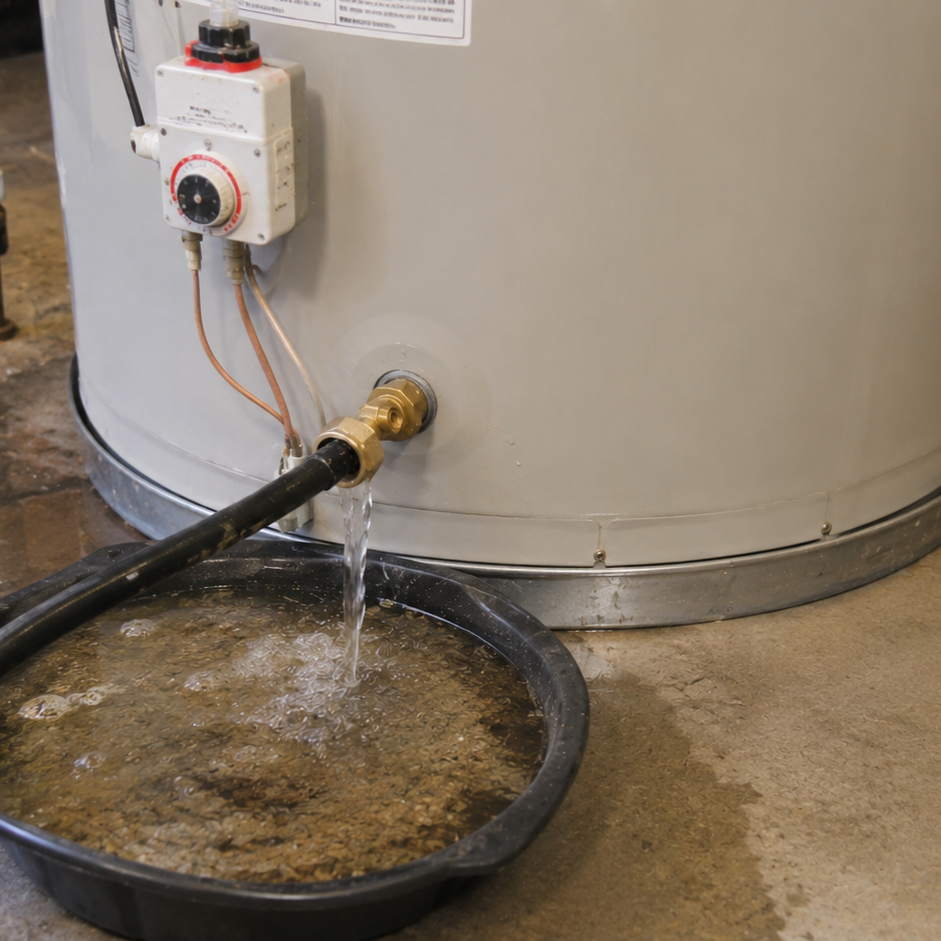
Flushing the water heater is one of those maintenance tasks that's easy to skip because the heater seems fine — until it isn't. Doing it on a sensible schedule is one of the simplest ways to keep a tank running efficiently and to add years to its life. The question is how often, and the answer depends mostly on your water.
Why Flushing Matters at All
Every tank water heater slowly collects sediment. Minerals and fine debris in the water settle to the bottom of the tank and build into a layer of scale over time. That layer causes real problems. On a gas heater, it sits between the burner and the water like a blanket, forcing the burner to work harder and longer to heat through it, which wastes energy and overheats the steel at the bottom of the tank, stressing it and shortening its life. On an electric heater, sediment can bury the lower heating element and burn it out. It also takes up space that used to hold hot water, so you get less.
Flushing drains the tank and washes that sediment out before it hardens and does damage. It's preventive maintenance in the truest sense.
The General Schedule
For most households, flushing once a year is the standard recommendation. That annual rhythm keeps sediment from accumulating to the point where it causes problems. It's a good habit to tie to something memorable, like a seasonal home maintenance routine, so it doesn't get forgotten.
In hard-water regions, sediment builds up faster because there's more dissolved mineral content in the water. There, flushing more often — roughly every six months — can be worth it to keep ahead of the heavier buildup. The harder your water, the more flushing pays off. If you're not sure how hard your water is, the buildup on faucet aerators and showerheads is a decent everyday clue — heavy white crust there usually means the inside of your tank is collecting minerals at a similar pace, and a more frequent flush is the safer bet.
| Your situation | Suggested flush frequency |
|---|---|
| Average water hardness | About once a year |
| Hard water | Every six months |
| Water softener in use | Yearly, but still check |
| Heater never flushed | Have it assessed first |
Signs Your Heater Is Overdue
A tank will tell you when sediment has built up. A rumbling, popping, or knocking sound during heating is the classic sign — it's the noise of water bubbling up through and around the sediment layer. Slower hot-water recovery, where the tank takes longer than it used to to reheat, points to sediment insulating the burner. And hot water that runs out faster than before can mean sediment has eaten into the tank's usable capacity. If you notice these, the heater is overdue for attention.
A Caution About Long-Neglected Tanks
There's an important wrinkle for older heaters that have never been flushed. After many years, the sediment can harden into a dense, compacted layer that a routine flush won't fully clear, and in some cases, disturbing it can reveal that the tank is already worn or expose a weak drain valve. On a heater that's gone a decade without maintenance, it's wise to have it assessed rather than assuming a flush will restore it. This is exactly why consistency from the start matters more than a dramatic one-time cleanout — regular flushing prevents the hardened buildup that's so hard to remove later.
Tip: Tie the flush to a date you'll remember — the start of summer, or alongside another annual home task. The most common reason heaters don't get flushed isn't difficulty; it's simply that there's no reminder, so years slip by and the sediment quietly builds.
Worth the Small Effort
Flushing is modest maintenance with an outsized payoff. A heater kept free of heavy sediment runs more efficiently, recovers faster, delivers its full hot-water capacity, and lasts closer to the top of its expected lifespan. Pairing the flush with an anode rod check — since both involve working with the tank — covers the two most impactful pieces of water heater upkeep at once. For the small effort a regular flush takes, it's one of the best returns in home maintenance. It's also a natural moment to look the unit over: a quick check of the temperature-and-pressure relief valve, the connections, and the base of the tank for any moisture can catch small issues while you already have the heater shut down and your attention on it. Bundling those checks into the same visit turns a simple flush into a brief overall health check for the heater.
Frequently Asked Questions
For most homes, about once a year is the standard schedule. In hard-water areas, where sediment accumulates faster, flushing roughly every six months can be worthwhile. The goal is to clear the sediment before it builds up enough to insulate the burner, slow heating, and shorten the tank's life. Consistency matters more than any single flush.
Sediment keeps accumulating at the bottom of the tank, where it forces the burner to overheat the steel, wastes energy, slows recovery, and can burn out an electric element. Over time, it hardens into a layer that's difficult to remove and contributes to early tank failure. Many heaters that fail prematurely were never flushed.
A rumbling, popping, or knocking noise during heating is the most common sign — it's caused by water moving through the sediment layer. Slower hot-water recovery and reduced hot-water capacity are others. If your heater is making noise or not performing as it used to, sediment buildup is likely the reason, and a flush is due.
It can. On a tank that's gone many years without a flush, the sediment may be hardened and difficult to clear, and disturbing it can sometimes reveal an already-worn tank or a weak drain valve. For a long-neglected or aging heater, it's wise to have it assessed rather than assuming a flush will fully restore it.
Softened water reduces the rate of sediment buildup, but it doesn't eliminate the need for flushing entirely. It's still good practice to flush yearly and check the tank, since some sediment and debris can still accumulate. A softener helps your heater, but regular maintenance remains worthwhile.
Some homeowners flush their own tanks, but it involves shutting down the heater, safely draining the hot water, and handling the drain valve, which can be brittle on older units. Many people have it done during a maintenance visit, often combined with an anode rod check. If you're unsure, having it done professionally avoids the common pitfalls.
A Yearly Habit That Pays Off
Flushing your water heater about once a year — or every six months in hard water — clears the sediment that quietly wears tanks out, keeping yours efficient and extending its life. Watch for rumbling, slow recovery, and reduced capacity as signs you're overdue, and be cautious with a tank that's gone years without maintenance. It's a small, regular habit with a real payoff in performance and longevity.
Want your water heater flushed and checked? — Get the sediment cleared and the anode rod inspected to keep it running its best. Frontier Plumbing serves Las Vegas, Henderson, and Enterprise. NSCB #286781. Call (702)602-6705.